Dish of the day · Dishle #2 answer · June 13, 2026
What Is Adobo? The Philippines' Vinegar-Braised Classic
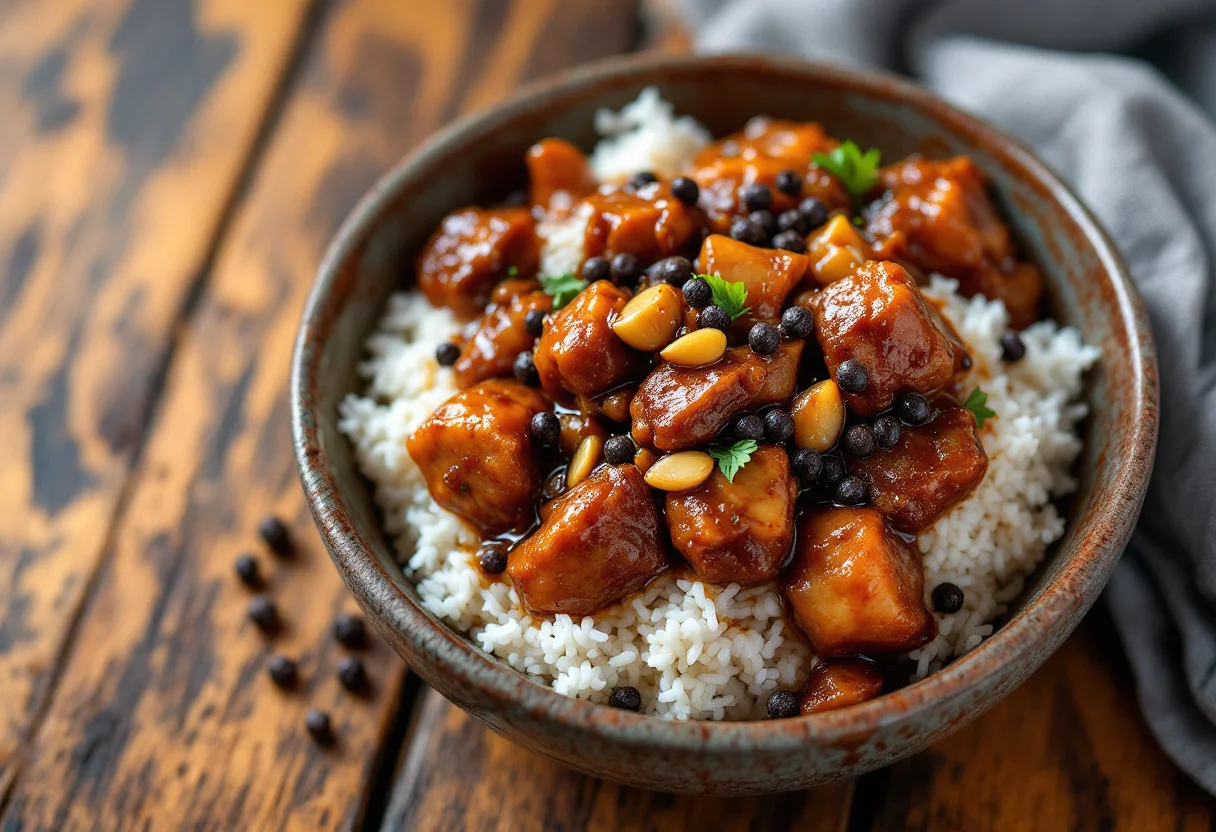
Adobo is the unofficial national dish of the Philippines: chicken or pork braised slowly in vinegar, soy sauce, garlic, bay leaves, and whole black peppercorns until the sauce turns dark, tangy, and glossy. The name comes from the Spanish word adobar, meaning “to marinate,” but the cooking method is far older than the name. Filipino cooks were simmering meat in vinegar centuries before Spanish ships arrived, and nearly every family in the country guards its own version: a little sweeter here, a little sharper there.
A short history
When Spanish colonizers reached the islands in the 1500s, they found locals already cooking meat and fish in palm or cane vinegar. The acid did double duty: it added flavor and kept food from spoiling in the tropical heat, long before refrigeration. A Spanish friar’s Tagalog dictionary from 1613 even recorded the dish as “adobo de los naturales,” the adobo of the natives. That’s why Filipino adobo shares a name with Mexican and Spanish adobos but almost nothing else; those are chili-and-paprika marinades, while the Filipino dish is a vinegar braise. Soy sauce joined the pot later, through Chinese traders, and the modern classic took shape. The only dispute left is whose recipe reigns.
What’s in it?
The classic version starts with chicken, pork, or both, cut into chunks. Into the pot go vinegar (cane or coconut vinegar in the Philippines), soy sauce, plenty of crushed garlic, bay leaves, and whole black peppercorns. That’s it. The meat simmers until tender, and the sauce reduces into something punchy and savory with a gentle sour edge. Regional variations abound: adobong puti skips the soy sauce, southern cooks add coconut milk, and some versions bring in turmeric, sugar, or chilies. Because vinegar preserves meat, adobo keeps well at room temperature, which is a feature rather than an accident.
How do you eat it?
Adobo is almost always served hot over plain white rice, which soaks up the sauce. That’s the whole point. Most Filipinos eat it with a spoon and fork, spoon in the dominant hand, pressing rice and sauce together into each bite. Leftovers are prized: the flavors deepen overnight, and day-old adobo gets chopped and fried with garlic rice and a fried egg for breakfast. At big family gatherings it sits alongside other dishes for sharing, but on an ordinary weeknight, adobo and rice alone make a complete, deeply satisfying meal.
🛎️ This was the Dishle answer on June 13, 2026.
Think you can guess today's mystery dish?