Dish guide
What Is Baklava? Layered Filo and Honey
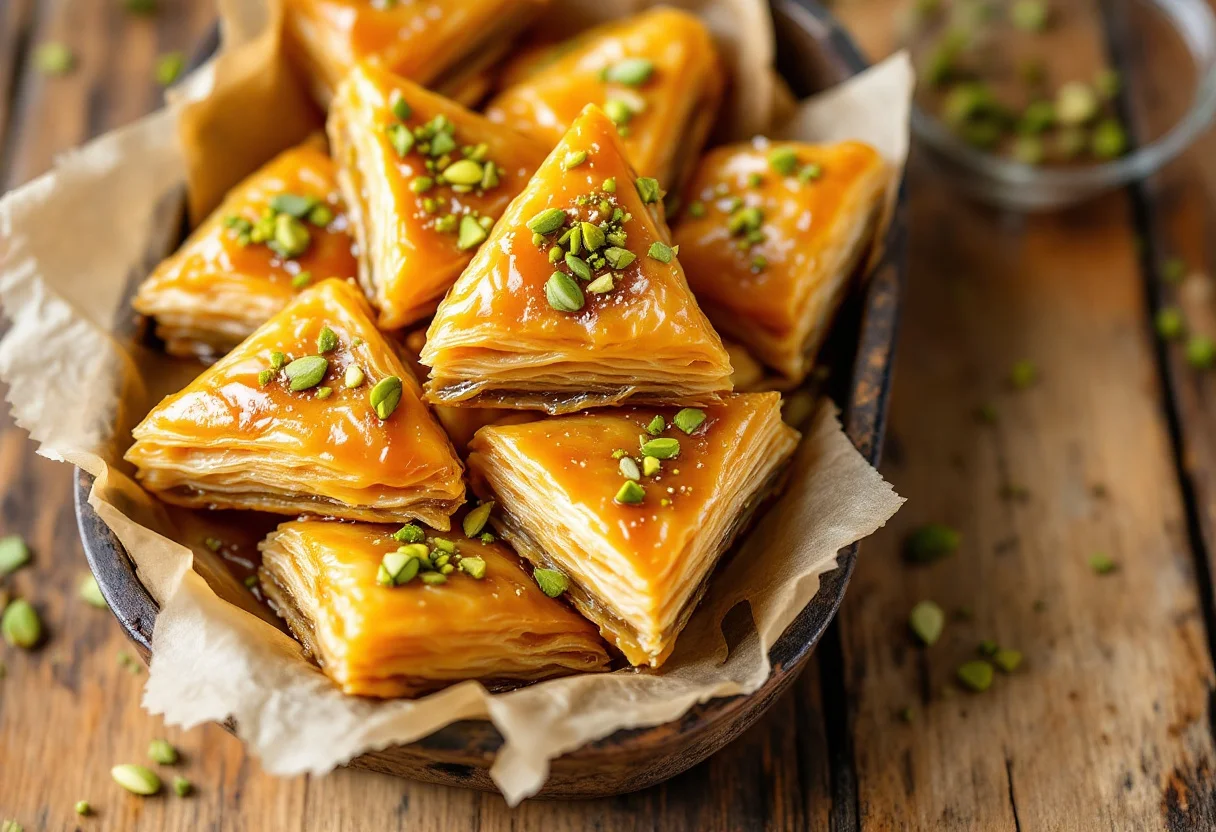
Baklava is a sweet pastry built from many sheets of paper-thin filo dough, layered with chopped nuts and soaked in honey or sugar syrup until every bite turns sticky and rich. It is a fixture of Turkish, Greek, and Middle Eastern tables. The name comes to us through Ottoman Turkish, though food historians still argue about its deeper roots. Each piece is usually cut into a diamond or square, with the syrup poured over while the pastry is fresh from the oven.
A short history
Baklava as we know it took shape in the kitchens of the Ottoman court, where cooks in Istanbul refined the art of stretching dough until it was almost see-through. But the idea of layering thin bread with nuts is older and widely shared, so the dish has many proud parents. Turks, Greeks, Armenians, and cooks across the Levant and Central Asia all claim a piece of its story, and that friendly argument has never been settled. What is clear is that the pastry spread along trade routes and through empires, picking up local nuts, spices, and syrups wherever it landed. Whole towns and families became known for their own treasured recipes.
What’s in it?
The base is filo: flour-and-water dough rolled and stretched into tissue-thin sheets, brushed with melted butter and stacked dozens high. Between the layers goes a filling of chopped nuts. Walnuts are common in the Balkans and Greece, while pistachios are prized in Turkish and Levantine versions, and almonds show up too. After baking, the whole tray is drenched in syrup made from sugar or honey, often scented with lemon, rose water, or a touch of cinnamon and cloves. The balance of butter, nuts, and syrup is what defines a good one, and bakers guard their ratios closely.
How do you eat it?
Baklava is finger food, served in small cut pieces because it is intensely sweet. It usually appears at the end of a meal or alongside coffee or tea, and it is a centerpiece at weddings, holidays, and religious feasts, where a large tray is shared among many guests. In Türkiye and Greece, a strong unsweetened coffee is the classic partner, cutting through the syrup. Many people let the cut tray rest for hours so the syrup soaks all the way through. Store it at room temperature rather than the fridge, which can dull the crisp layers and harden the butter.
Could this be tomorrow's mystery dish?
Play today's Dishle and find out.