Dish guide
What Is Borscht? Ukraine's Ruby-Red Beet Soup
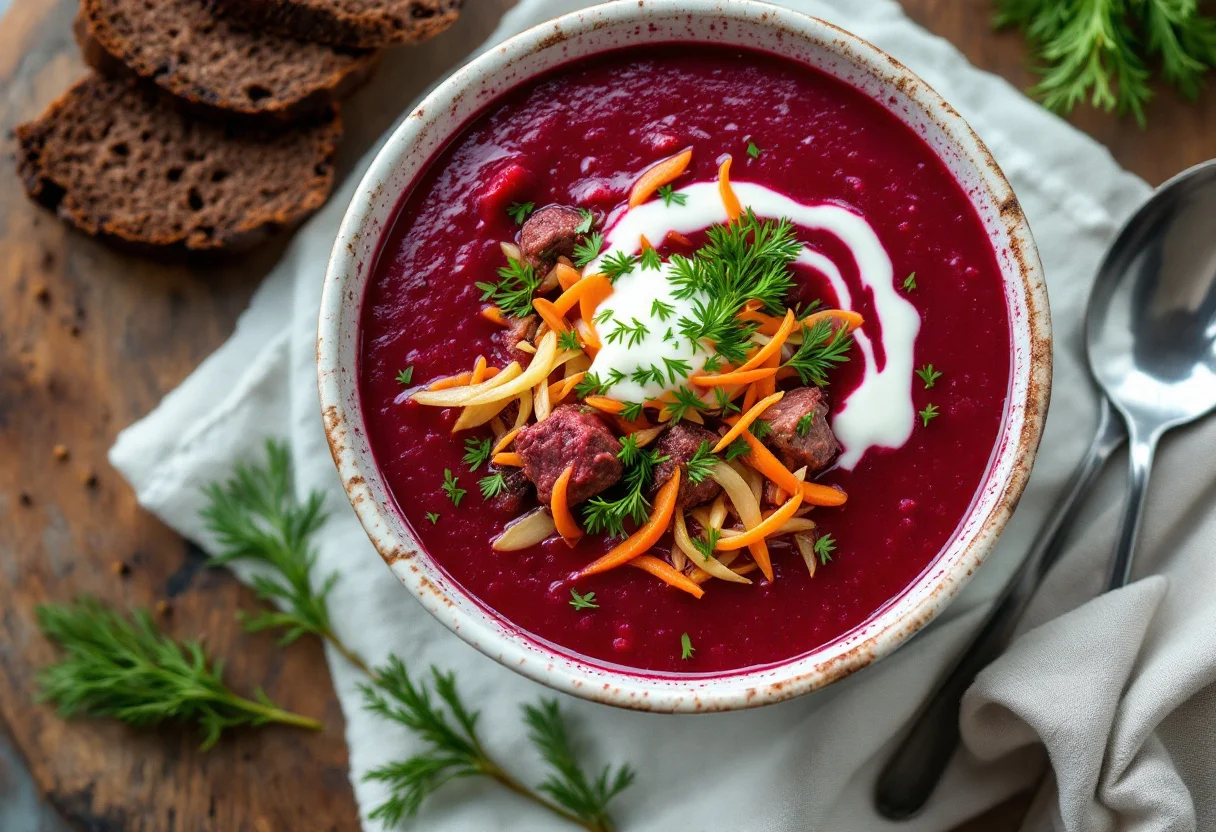
Borscht is a sour, beet-based soup from Ukraine, known for its deep ruby color and bright, tangy flavor. The name traces back to an old Slavic word for hogweed, a wild plant that gave the early soup its sourness long before beets took over. Today most versions start with beetroot, simmered with cabbage and other vegetables, often with meat, and finished with a swirl of sour cream that turns the surface a soft pink. It is comfort food with a sharp, refreshing edge, and few dishes feel as deeply tied to home and the changing seasons.
A short history
Borscht’s roots stretch back centuries across Eastern Europe. The earliest versions weren’t red at all; they were made from fermented hogweed stems, which gave a sharp, sour broth. Beets entered the pot later and slowly became the star, lending the soup its now-famous color. Ukraine is widely seen as borscht’s heartland, where countless family and regional recipes grew up side by side. Neighboring countries like Poland, Belarus, and Russia all have beloved versions too, and people still trade friendly claims over whose is best. In 2022, UNESCO added Ukrainian borscht cooking to its list of intangible cultural heritage in need of urgent safeguarding.
What’s in it?
At its core, borscht starts with beets, which give both color and an earthy sweetness. From there, cooks add cabbage, carrots, onions, and potatoes, usually built on a broth made with beef, pork, or sometimes just vegetables. A splash of vinegar or lemon keeps the signature tang alive. Tomatoes, beans, and plenty of garlic show up in many regional recipes, and some cooks stir in a small spoon of sugar to balance the acidity. The finishing touch is almost always a dollop of sour cream and a scatter of fresh dill, stirred in just before the first spoonful.
How do you eat it?
Borscht is usually served hot, steaming in a deep bowl, though chilled summer versions are popular when the weather turns warm. Most people stir in the sour cream themselves, watching the red soup soften to pink. It’s commonly eaten with thick slices of dark rye bread, or with pampushky, small, soft garlic rolls that are made for dunking. A bowl often anchors a family meal, shared slowly around the table while everyone reaches for seconds. Leftovers are prized too, since many cooks say the flavor only deepens after a day in the fridge.
Could this be tomorrow's mystery dish?
Play today's Dishle and find out.