Dish guide
What Is Ema Datshi? Bhutan's Chili Cheese Stew
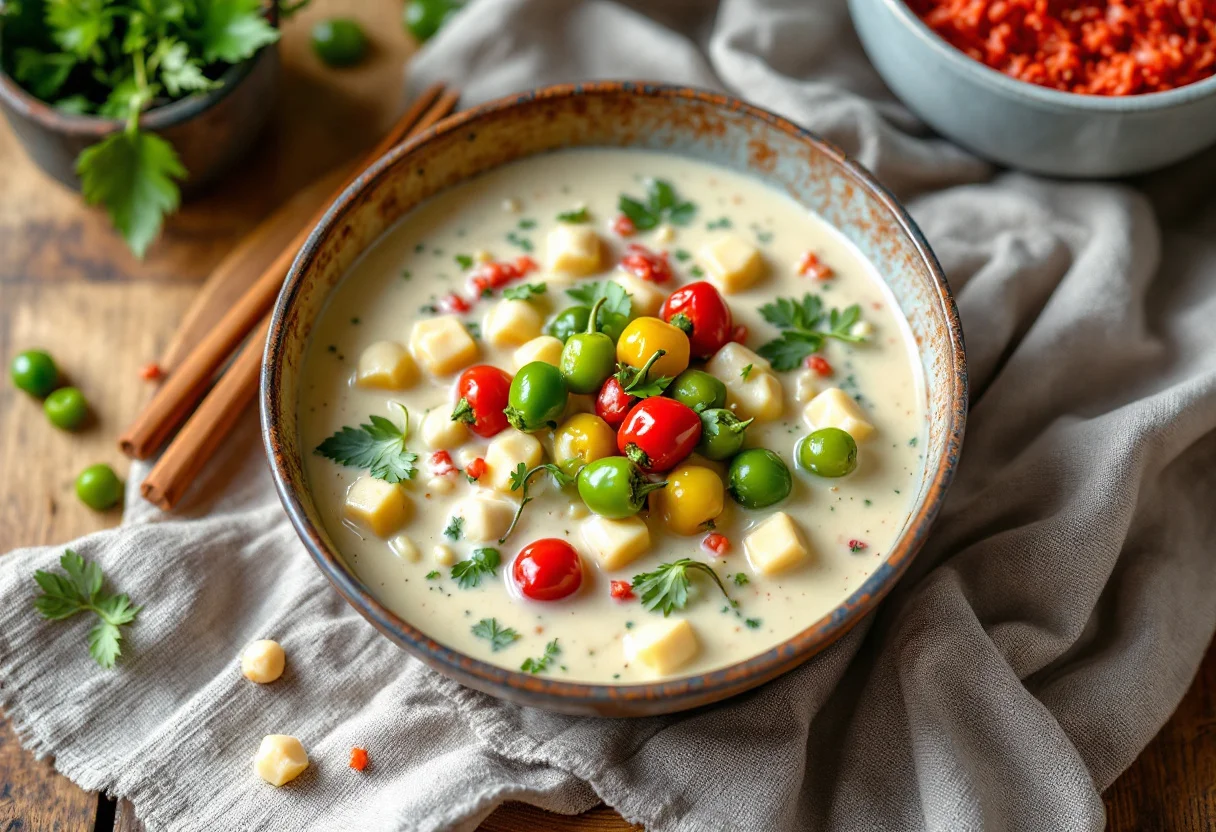
Ema Datshi is the national dish of Bhutan: a stew of whole chilies cooked down in melted soft cheese. The name says it plainly: ema means chili and datshi means cheese in Dzongkha, the country’s official language. Here chilies are treated as a vegetable in their own right, not a seasoning sprinkled on top. The result is creamy, sharp, and seriously hot, with the cheese softening the burn just enough. Bhutanese cooks make it constantly, and most households eat some version of it daily.
A short history
Ema Datshi grew out of the high valleys of the Himalayas, where chilies and dairy were two things mountain farmers could reliably produce. Cheese came from cattle and yaks grazing the slopes, and chilies thrived in village gardens, often strung up to dry on rooftops in bright red curtains. Over time the pairing became the backbone of Bhutanese home cooking. Records of the dish are mostly oral and culinary rather than written, so no single inventor or date is claimed. What’s clear is that it spread alongside Bhutan’s love of heat, and today it stands as the dish most associated with the country, served from village kitchens to city restaurants.
What’s in it?
The base is short and stubborn: fresh or dried chilies, soft local cheese, and water, cooked until the cheese melts into a loose sauce. Onion, garlic, and tomato often join the pot, and a little oil rounds it out. The cheese, called datshi, is a crumbly farmer-style cheese; outside Bhutan, cooks sometimes stand in with feta or other soft cheeses. Green chilies make a milder, brighter version, while dried red ones push the heat up. Close cousins swap the main vegetable: kewa datshi uses potatoes, and shamu datshi uses mushrooms.
How do you eat it?
Ema Datshi almost always arrives with rice, and traditionally that means Bhutanese red rice, a nutty, slightly chewy mountain grain. The stew is spooned over or beside the rice, and people mix bites together so the cheesy sauce coats every grain. It’s a hands-and-spoon kind of meal, usually shared family-style from dishes set in the middle of the table. You’ll often find it next to other datshi dishes and a few sides, letting everyone build a plate to their own taste. Have water or a cup of butter tea nearby; the heat is real, and the cheese only tames so much of it.
Could this be tomorrow's mystery dish?
Play today's Dishle and find out.