Dish guide
What Is Empanada de Pino? Chile's Beef-and-Olive Pastry
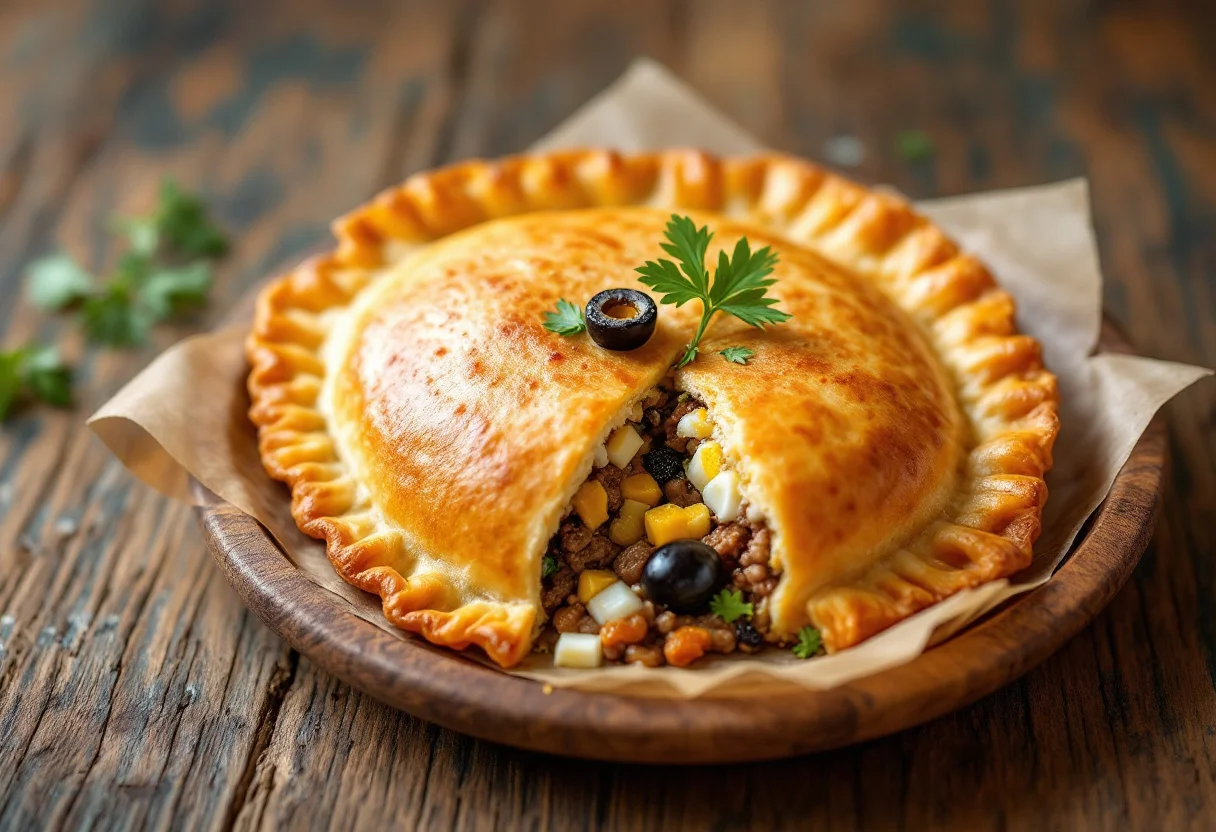
Empanada de Pino is Chile’s signature baked turnover: a half-moon of wheat-flour dough folded around pino, a savory mixture of minced beef, onions, raisins, a wedge of hard-boiled egg, and a single black olive. The word empanada comes from the Spanish verb empanar, meaning to wrap something in dough. Pino is the name of the filling itself, a word many people trace back to Mapudungun, the language of the Mapuche people of southern Chile. Sturdy, portable, and deeply familiar, it is a fixture of family kitchens and national celebrations alike.
A short history
Stuffed pastries crossed the Atlantic with Spanish settlers, who had inherited the idea from older Iberian breads packed with meat or fish. In Chile, cooks reworked the form for local tastes, building the pino around beef and slow-cooked onion and tucking in egg, raisins, and an olive. Over generations the empanada de pino became far more than everyday food. It turned into a symbol of home, tied above all to Fiestas Patrias, the September holidays marking independence, when families and bakeries produce them by the tray. Friendly arguments over the right amount of onion, or whether raisins truly belong, are part of the tradition, and most families keep a recipe they swear by.
What’s in it?
The heart of the dish is the pino: beef, hand-diced or ground, cooked down slowly with a generous amount of onion and seasoned with cumin, paprika, and sometimes a pinch of chili. Many cooks make it a day ahead so the flavors settle and deepen. Each pastry then gets a slice of hard-boiled egg, a few raisins, and one black olive, often with the pit left in. The wrapper is a firm wheat-flour dough, rolled thick enough to hold the juicy filling, then brushed with egg so it bakes to a deep golden color.
How do you eat it?
The baked empanada de pino is best eaten hot from the oven, held in the hand like a hearty pocket. One is filling enough for a light meal, and two make a generous lunch. Chileans often pair it with a glass of red wine, following a well-known local match, or with a spoonful of pebre, the fresh salsa of tomato, onion, cilantro, and chili that sits on most tables. There is one piece of advice every newcomer learns fast: bite carefully, because that whole olive may still be hiding its pit.
Could this be tomorrow's mystery dish?
Play today's Dishle and find out.