Dish guide
What Is Feijoada? Brazil's Black Bean and Pork Stew
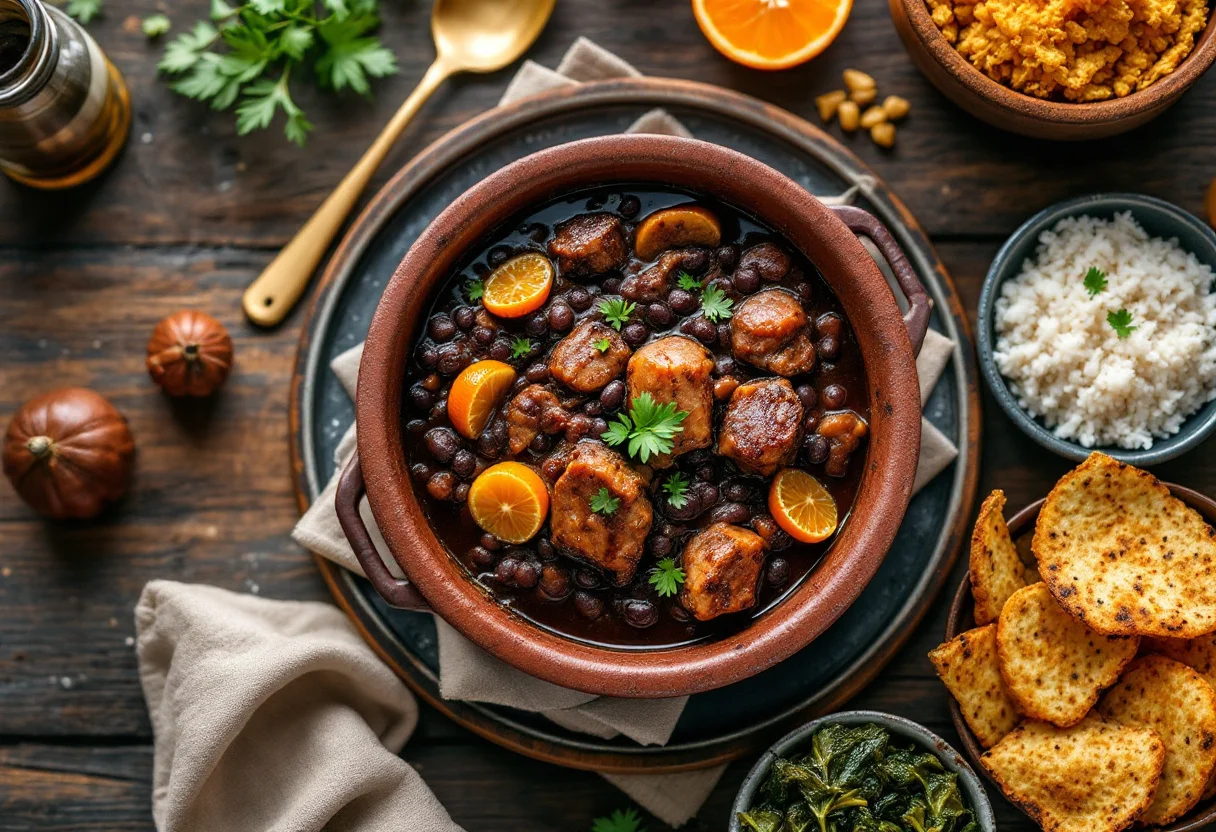
Feijoada is a slow-cooked Brazilian stew of black beans and pork, simmered until the broth turns dark, thick, and glossy. The name comes from feijão, the Portuguese word for bean, with the ending -ada signaling a dish built around it. Widely treated as Brazil’s national dish, it is hearty, smoky, and meant for sharing. Cooks combine several cuts of meat with the beans, then serve the stew over white rice alongside a small spread of bright, crunchy sides that cut through its richness.
A short history
Feijoada grew out of Portugal’s long tradition of bean-and-meat stews, which settlers carried to Brazil during the colonial era. A popular story claims enslaved people invented it from leftover scraps, but food historians push back: black beans were already a staple, and the pricier cuts in many versions don’t fit the leftovers tale. The truth is friendlier to debate than to settle. What’s clear is that regional cooks across Brazil made the dish their own over generations. By the twentieth century, feijoada had become a weekend ritual and a symbol of the table where everyone gathers. Restaurants began offering it on set days, and the dish slowly traveled from home kitchens into the country’s wider food culture.
What’s in it?
The base is black beans, slow-simmered until creamy and almost saucy. The pork does the heavy lifting: smoked sausage, salted pork, ribs, and often trimmings like ears, feet, or tail, which add deep, gelatinous body. Beef cuts such as dried, salted carne seca show up too. Cooks build flavor with garlic, onion, and bay leaves, then let time do the rest. Regional versions swap the meats freely, so no two pots taste quite the same. Some southern cooks use brown beans instead of black. A few add a splash of cachaça or a smoked bone for extra depth, and the dish tastes even better reheated the next day.
How do you eat it?
Feijoada is a leisurely, communal meal, traditionally enjoyed on Wednesdays and Saturdays when there’s time to linger. The stew is ladled over fluffy white rice. Around it go the classics: farofa, toasted cassava flour that soaks up the broth; sautéed collard greens sliced into thin ribbons; and slices of fresh orange, whose brightness balances the smoky, salty meat. A spoonful of hot sauce is optional. People eat with a fork and spoon, helping themselves from a shared pot, often over a long lunch that stretches deep into the afternoon.
Could this be tomorrow's mystery dish?
Play today's Dishle and find out.