Dish guide
What Is Goulash? Hungary's Paprika Stew
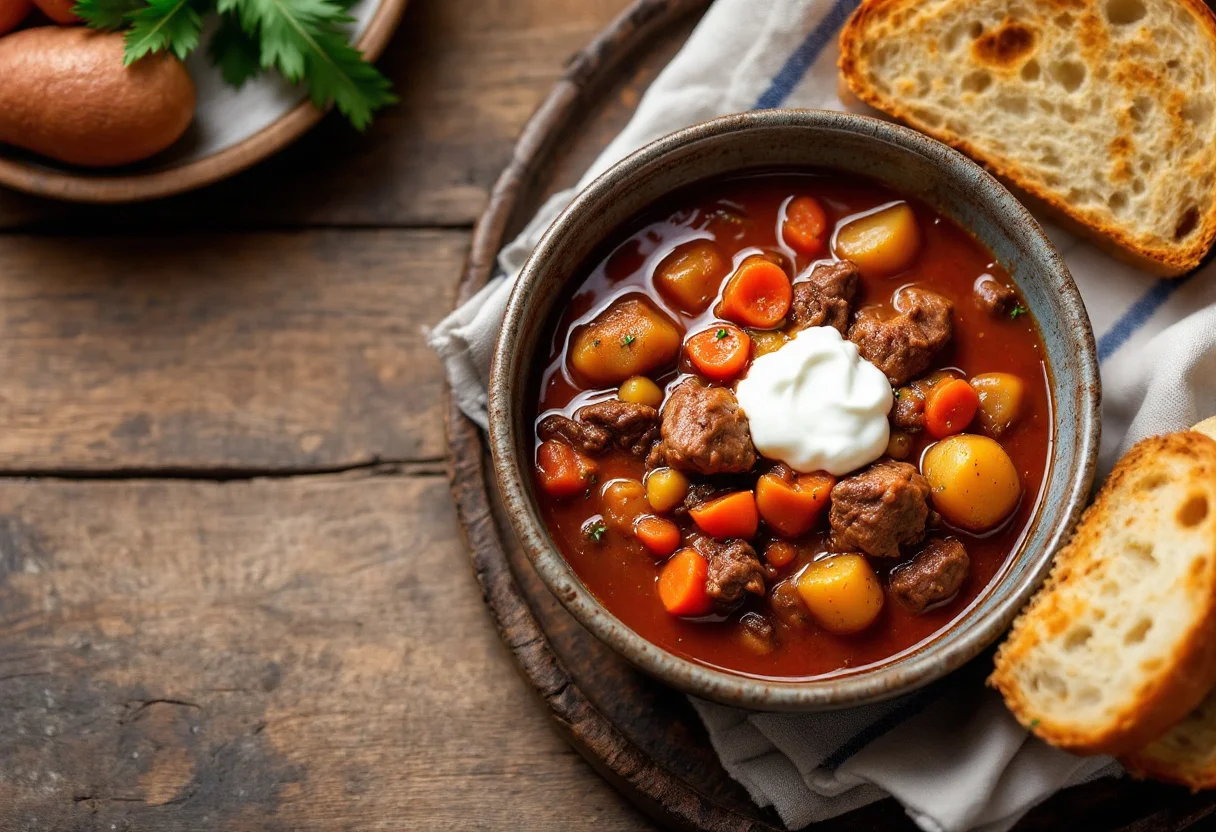
Goulash is a hearty Hungarian stew of beef, onions, and vegetables, simmered slowly with paprika until the broth turns deep red. Its name comes from the Hungarian word gulyás, meaning herdsman or cowherd: the dish began as a meal cooked by cattle herders out on the open plains. Somewhere between a thick soup and a stew, goulash is built around tender chunks of meat and a generous spoonful of paprika, the spice that gives it both color and gentle warmth. It is the kind of dish made for cold days and slow afternoons.
A short history
Goulash goes back to the herdsmen of the Hungarian plains, who tended cattle far from home and needed food that traveled well. They would cook meat down with onions, dry it, and carry it in bags, then add water to make a quick stew over an open fire. Paprika, brought to Hungary much later, became the soul of the dish and gave it the red color it is known for today. By the 1800s, goulash had grown into a national symbol, served in homes and inns alike. As Hungarians moved across Central Europe, the dish spread too, and neighboring countries developed their own beloved versions, each with friendly pride about whose is best.
What’s in it?
The heart of goulash is beef, usually a tougher cut that grows tender over a long, slow simmer. Onions are just as important; cooks use a lot of them, softening them down before the meat goes in. Then comes paprika, the spice that defines the whole pot, sweet and mild rather than fiery. From there, recipes add garlic, caraway seeds, tomatoes, and peppers. Potatoes and carrots are common, making the stew heartier. Some cooks drop in small pinched dumplings called csipetke. The result is a rich, brick-red broth full of soft meat and vegetables.
How do you eat it?
Goulash is served hot, ladled into deep bowls and almost always eaten with a spoon, since the traditional version is brothy enough to count as a soup. A thick slice of crusty bread on the side is the classic partner, perfect for soaking up the last of the paprika-rich liquid. It is everyday comfort food, the sort of meal that anchors a family table on a chilly evening. Many cooks say it tastes even better the next day, once the flavors have had a night to settle and deepen. A dollop of sour cream is a welcome finish in some homes.
Could this be tomorrow's mystery dish?
Play today's Dishle and find out.