Dish guide
What Is Gravlax? Nordic Salt-Cured Salmon, No Heat
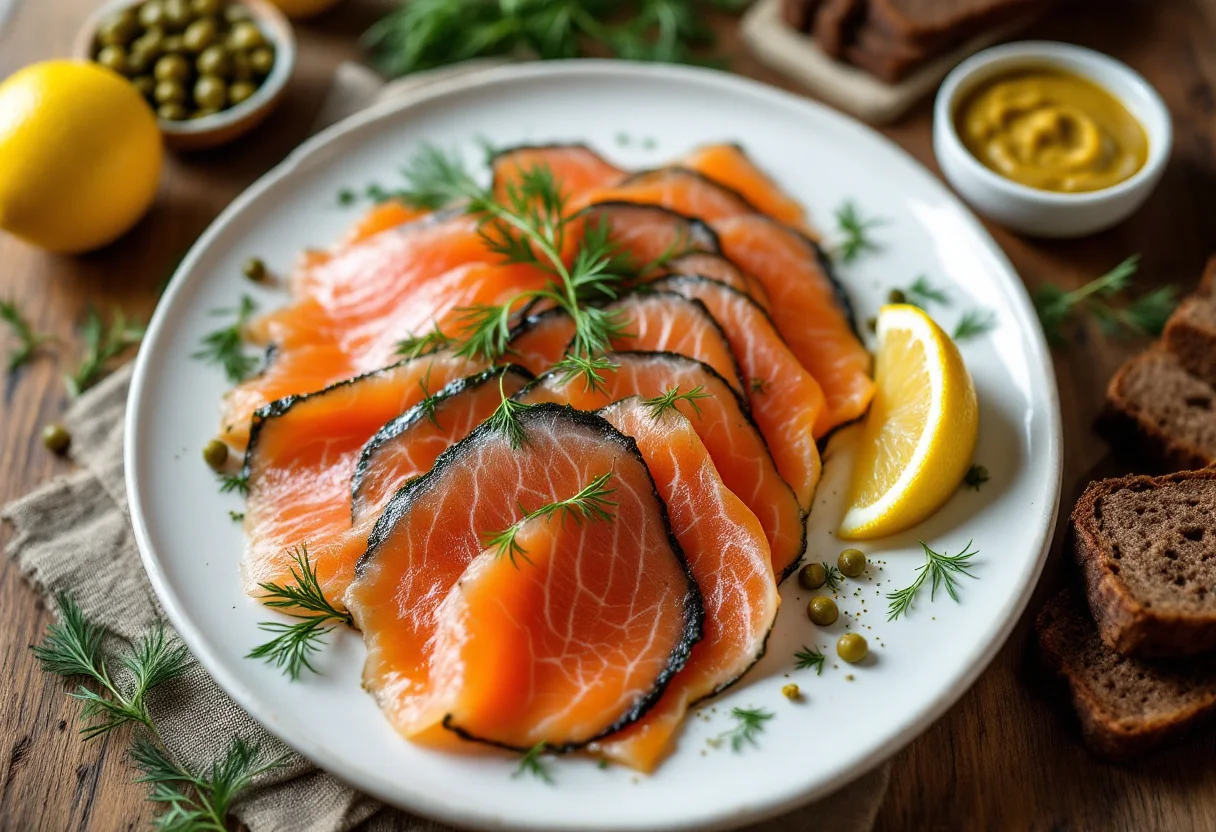
Gravlax is a Nordic dish of raw salmon cured with salt, sugar, and dill until it turns silky and translucent, no cooking required. The name comes from the Scandinavian words for “grave” and “salmon,” a nod to how the dish was first made. Centuries ago, fishermen buried salted fillets in the sand to ferment them slowly. Today the burying is gone, but the cure remains. You will find gravlax across Norway, Sweden, Denmark, and Finland, with each country spelling it a little differently.
A short history
Long before refrigerators, people in the Nordic countries needed a way to keep salmon from spoiling. The medieval solution was clever: rub fillets with salt, then bury them in the cold ground or in sand above the high-tide line. The fish slowly fermented, and the salt drew out moisture that would otherwise feed spoilage. That buried, lightly soured version is where the name “grave salmon” comes from. Over the centuries the recipe softened. Cooks swapped fermentation for a quick salt-and-sugar cure, added fresh dill, and stopped burying the fish entirely. What began as survival food became a holiday staple, served at Christmas, Easter, and Midsummer tables.
What’s in it?
The cure is simple and the ingredients are few. You need a fresh, very high-quality salmon fillet, coarse salt, sugar, and a generous pile of fresh dill. The salt and sugar pull water from the fish and firm up its texture, while the dill perfumes the flesh as it rests in the fridge for a day or two. Many cooks add crushed white pepper, and some splash on aquavit, vodka, or gin for extra aroma. Regional versions vary: Swedish cooks often lean sweeter, while some Norwegians prefer more salt. Beetroot, citrus zest, or juniper berries sometimes join the mix for color and scent.
How do you eat it?
Gravlax is always served cold and raw, never heated. The cured fillet is sliced very thin, on a slight angle, so each piece is almost see-through. The classic partner is hovmästarsås, a sweet-and-tangy mustard-dill sauce that cuts the richness of the fish. You will usually find gravlax on dark rye bread or crisp flatbread, often as part of a smörgåsbord spread. It also turns up on boiled potatoes, next to scrambled eggs, or with nothing more than a squeeze of lemon. Eat it with a fork, in small bites; the flavor is delicate, and it rewards slowing down.
Could this be tomorrow's mystery dish?
Play today's Dishle and find out.