Dish guide
What Is Kabsa? Saudi Arabia's Spiced Rice and Meat Feast
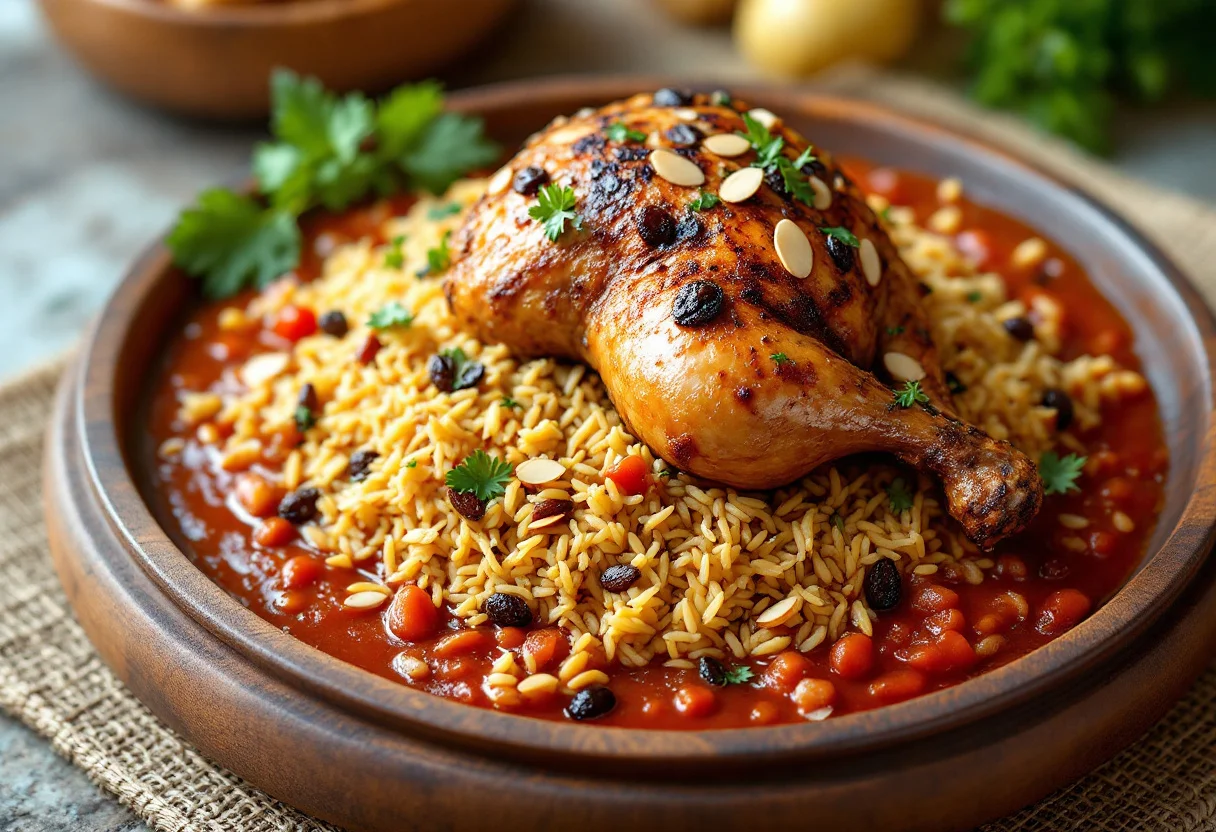
Kabsa is a fragrant one-pot rice dish from Saudi Arabia, where long-grain rice simmers with chicken, lamb, goat, or fish and a warm blend of spices. The name comes from the Arabic verb kabasa, meaning to press or pack together, a nod to how the rice and meat cook squeezed into a single pot. Across the Arabian Peninsula it carries many names, but in Saudi homes it is the everyday centerpiece, served on a wide platter for the whole table to share.
A short history
Kabsa grew out of the Arabian Peninsula’s long love of rice dishes, which arrived through centuries of trade across the Indian Ocean and the old spice routes. Rice was not native to the desert, so it came by ship alongside cardamom, cloves, cinnamon, and dried lime from places like India and Persia. Cooks folded these flavors into local traditions of slow-cooked meat. The dish is closely related to other Gulf rice plates, including Qatar’s machboos, and they share roots in the same trading world. Today kabsa is treated as Saudi Arabia’s national dish, cooked for weddings, holidays, and ordinary weeknights alike.
What’s in it?
The backbone is long-grain basmati rice and a generous amount of meat, usually chicken or lamb, though goat, camel, or fish all appear. The signature flavor comes from baharat, a spice mix that can include black pepper, cumin, coriander, cardamom, cinnamon, cloves, and nutmeg. Dried limes, called loomi, give the dish its tart, slightly smoky edge. Tomatoes, onions, and garlic build the base, and cooks often add carrots, raisins, or toasted nuts. The exact blend shifts from one household to the next, which is part of why no two pots taste quite the same.
How do you eat it?
Kabsa is food for sharing. The rice is mounded on a large platter with the meat resting on top, often crowned with fried onions, almonds, and pine nuts. Families gather around the dish and eat together, traditionally using the right hand to scoop and press small bunches of rice. A fresh tomato relish or a garlicky chili sauce called daqqus is spooned alongside for heat and brightness. Plain yogurt or a simple green salad cools things down. It is generous, unhurried eating, a meal built for company rather than a quick plate on your own. Leftovers, if there are any, taste even better the next day once the spices have had time to settle into the rice.
Could this be tomorrow's mystery dish?
Play today's Dishle and find out.