Dish of the day · Dishle #19 answer · June 30, 2026
What Is Moussaka? Greece's Layered Eggplant Bake
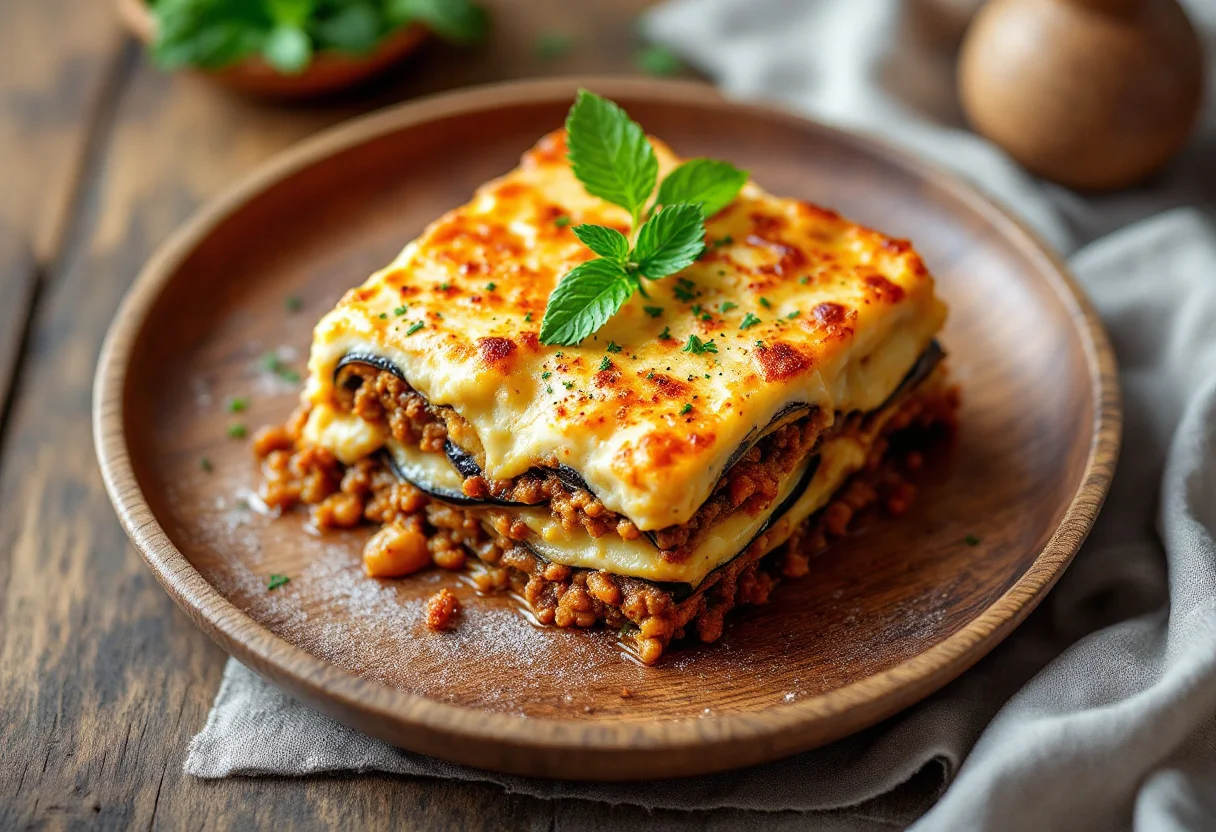
Moussaka is a baked casserole that layers slices of eggplant, a spiced ground-meat sauce, and a thick béchamel crown into one hot, sliceable dish. The name traces back to the Arabic musaqqa’a, meaning something close to “chilled” or “moistened,” a clue that older versions were served cool rather than oven-hot. Today’s Greek moussaka, with its custardy white-sauce top, is the one most people picture, yet cooks across the Balkans, Turkey, and the eastern Mediterranean each make a version they call their own. It is comfort food built for sharing.
A short history
Moussaka’s roots are tangled, and that is part of its charm. Eggplant reached the Mediterranean through the Arab world, and dishes that layer it with meat show up across the Ottoman table going back centuries. Many regional cousins, from the Levant to the Balkans, share the name and the basic idea, each with its own twist. The layered, béchamel-topped version most Greeks serve today was codified in the 1920s by chef Nikolaos Tselementes, who folded a French-style white sauce into the recipe and reshaped how the dish looked. So who “owns” moussaka? Plenty of cooks would happily argue it over dinner, and the friendly debate has never really been settled.
What’s in it?
The structure is three layers. At the base, eggplant is sliced, salted to draw out moisture, then fried or roasted until soft. The middle is a ground-meat sauce (usually lamb or beef) simmered with onion, garlic, tomato, and warm spices like cinnamon and allspice. On top sits béchamel, a milk sauce thickened with flour and butter, often enriched with egg yolks and a handful of cheese. Some cooks slip a layer of potato slices beneath the eggplant, and plenty of meat-free versions swap in zucchini, mushrooms, or lentils instead.
How do you eat it?
Moussaka is baked until the top turns deep gold, and then it asks for patience: let it rest 20 to 30 minutes so the layers firm up and cut into clean squares. It is served hot or warm, usually as a hearty main course. A crisp green salad, some crusty bread, and a glass of red wine round out the plate nicely. You will find it on taverna menus and at family gatherings, especially around holidays. Many cooks swear it tastes even better the next day, once the flavors have had time to settle, and leftovers reheat happily.
🛎️ This was the Dishle answer on June 30, 2026.
Think you can guess today's mystery dish?
Related dishes
All dish guides · Dishle #19 hints & answer · Puzzle archive