Dish guide
What Is Muamba de Galinha? Angola's Palm Oil Chicken Stew
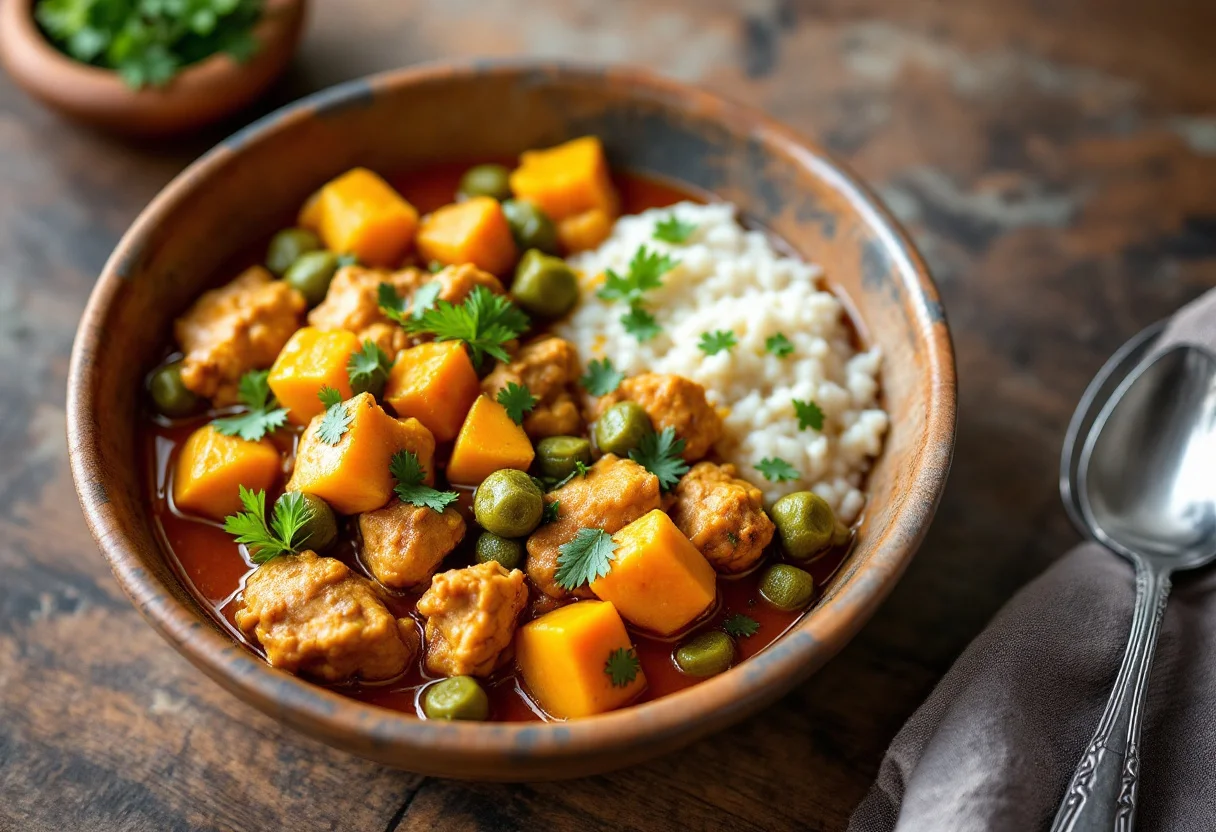
Muamba de Galinha is Angola’s national chicken stew, simmered in deep-red palm oil with okra, garlic, onion, and chili until the sauce turns thick and glossy. The name comes from the Kimbundu word muamba, which points to the palm-oil sauce at the heart of the dish. It is comfort food and celebration food at once: a single pot that shows up at Sunday lunches, family parties, and holidays across the country. Rich, savory, and a little spicy, it is the plate many Angolans name when asked what tastes like home.
A short history
Muamba grew out of the cooking of the Mbundu people of north-central Angola, where the oil palm has long been a kitchen staple. Red palm oil, pressed from the fruit and prized for its color and earthy taste, gives the stew its identity. Over centuries the dish absorbed ingredients that arrived through Atlantic trade, including chili peppers and, in some kitchens, garlic and onion. Portuguese colonial cooks later folded muamba into a shared table, and it traveled with Angolan families abroad. Today you will also meet a fish version, but the chicken one wears the “national dish” badge most proudly.
What’s in it?
The base is bone-in chicken browned and then stewed in red palm oil, which stains everything a warm orange. Okra is the classic thickener, breaking down to give the sauce body. Garlic, onion, and tomato round out the pot, and a hit of fresh chili (often a small, fierce pepper) brings the heat. Many cooks add quiabo (okra) generously and a squeeze of lemon to brighten things. Squash or sweet potato sometimes joins in. Seasoning stays simple: salt, the peppers, and the unmistakable palm oil doing most of the talking.
How do you eat it?
Muamba de galinha is a shared, spoon-friendly meal, almost always served hot over a starch that soaks up the bright orange sauce. The usual partner is funje, a smooth cassava-flour porridge pinched into bites with the fingers and dragged through the stew. Rice works too, as does pirão made from cornmeal. People gather around the pot, pile their plates, and eat slowly, often with extra chili on the side for anyone who wants more fire. A simple salad or sautéed greens can sit alongside, but the stew stays the star. Leftovers only taste better the next day, once the flavors settle deeper into the sauce and the palm oil firms up at the edges.
Could this be tomorrow's mystery dish?
Play today's Dishle and find out.