Dish of the day · Dishle #5 answer · June 16, 2026
What Is Pavlova? The Meringue Two Nations Claim
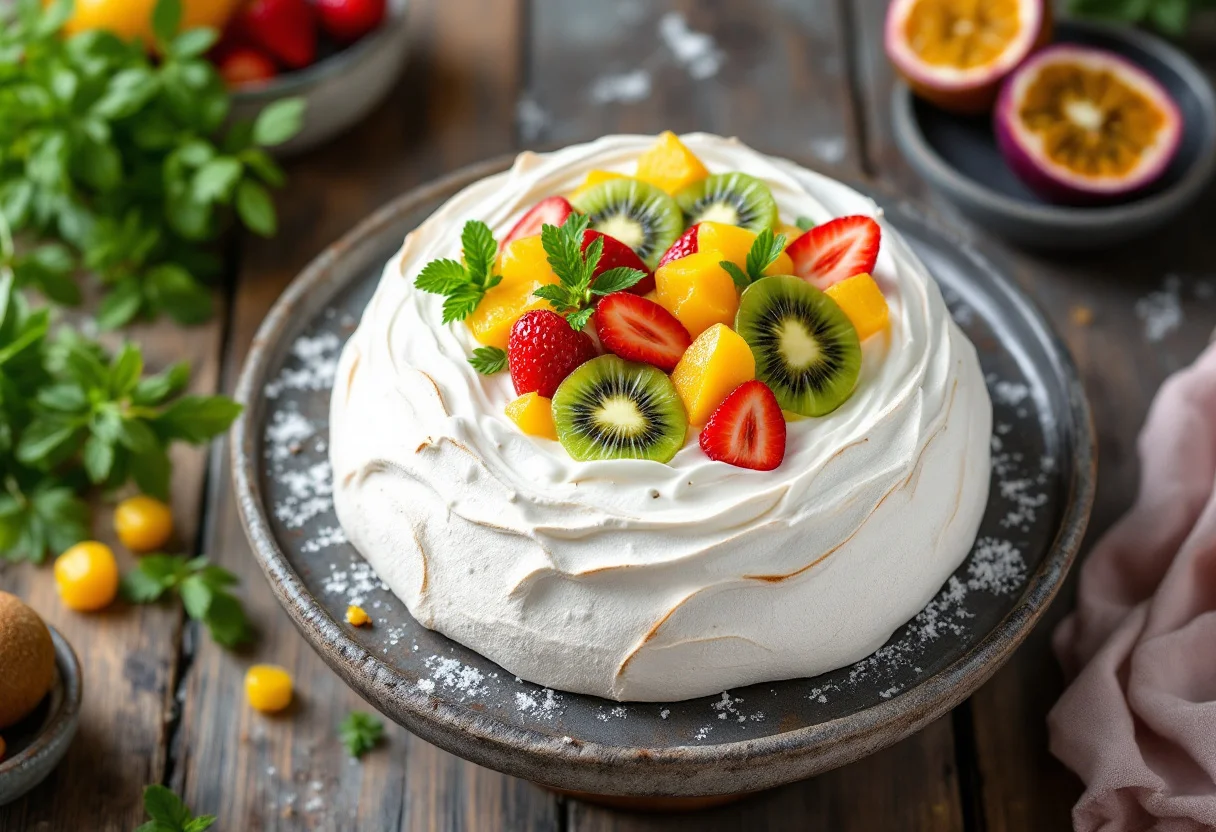
Pavlova is a baked meringue dessert with a crisp shell, a soft marshmallow-like center, and a topping of whipped cream and plenty of fresh fruit. It is named after Anna Pavlova, the famous Russian ballerina who toured Australia and New Zealand in 1926 and left such an impression that someone (exactly who is still argued about) created an airy dessert in her honor, said to be as light as the dancer herself. Sweet, cold, and a little dramatic, pavlova remains the celebration centerpiece of choice in both countries today.
A short history
Few desserts have started a friendlier feud. New Zealand and Australia have both claimed the pavlova for nearly a century, and neither shows any sign of letting go. New Zealand’s case is strong: the Oxford English Dictionary traces the earliest pavlova recipe to New Zealand in 1927, and one biographer wrote that a Wellington hotel chef invented it during the ballerina’s 1926 tour. Australia points to chef Bert Sachse, who served his pavlova at a Perth hotel in 1935 and is often credited with popularizing the version we know today. Food historians have found related meringue cakes on both sides of the Tasman Sea, and in Europe before that. The dispute may never be settled, which is half the fun.
What’s in it?
The base is simple: egg whites whipped with sugar until glossy, with a little cornstarch and a splash of vinegar folded in. Those last two are the secret: they keep the inside soft and marshmallowy while the outside bakes into a crisp shell. Once cooled, the meringue is piled with softly whipped cream and fresh fruit. Kiwifruit and strawberries are classic in New Zealand; passionfruit pulp is the favorite in Australia. Some bakers add berries, mango, or chocolate shavings, but the cream-and-fruit formula rarely changes. The contrast is the point: crackly shell, soft middle, cool cream, tangy fruit.
How do you eat it?
Pavlova is served cold, usually as the finale of a summer celebration. In New Zealand and Australia, Christmas falls in midsummer, so a chilled pavlova plays the role a warm pudding plays in Britain: it is the holiday dessert. The cream and fruit go on just before serving; top it too early and the crisp shell softens. It is sliced like a cake and eaten with a fork, shattering pleasantly as you cut in. Expect a friendly argument at the table over who invented it; after a hundred years, the debate has become part of the dessert itself.
🛎️ This was the Dishle answer on June 16, 2026.
Think you can guess today's mystery dish?