Dish guide
What Is Belgian Waffle? The Deep-Pocket Sugar Waffle
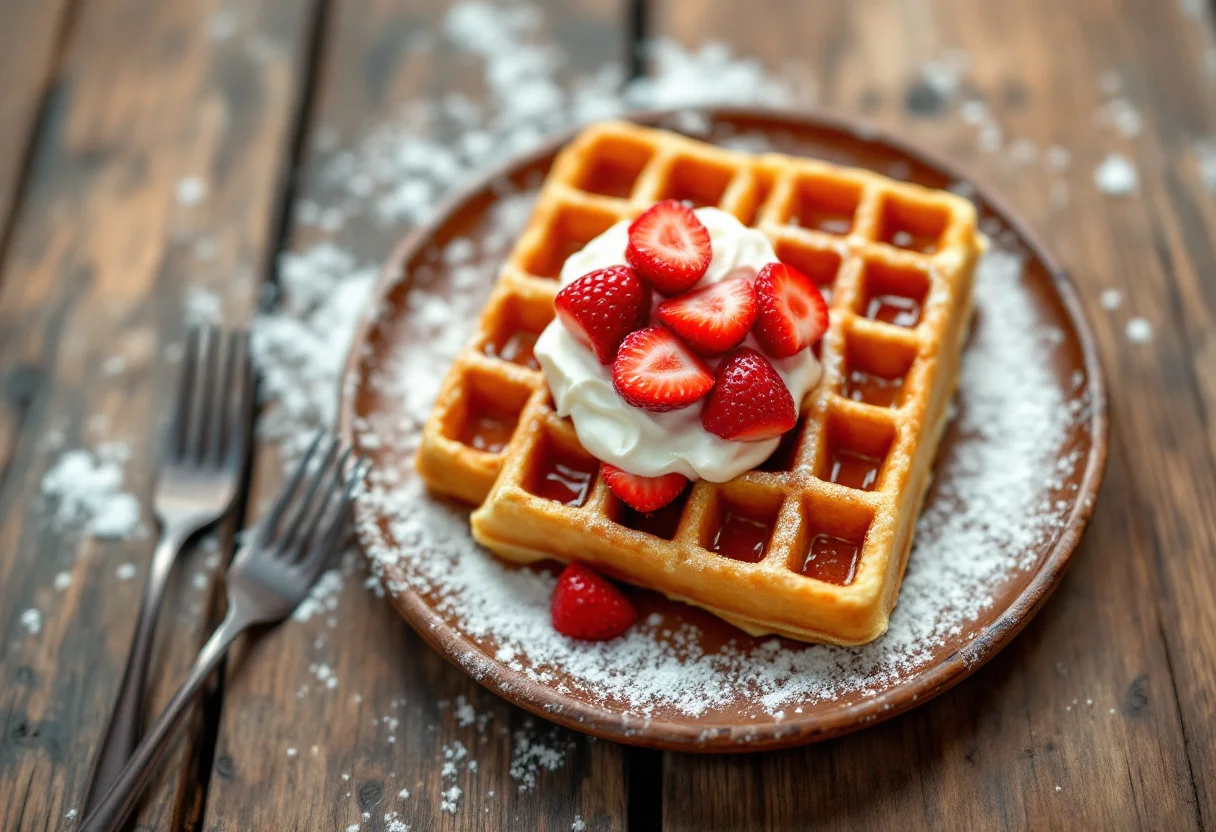
A Belgian waffle is a light, deep-pocketed waffle made from a leavened batter and baked until the outside turns crisp while the inside stays airy. The name is a friendly puzzle: in Belgium, cooks rarely say “Belgian waffle” at all. They name two different treats instead: the airy Brussels waffle and the chewy Liège waffle. The English term spread after the 1964 New York World’s Fair, where vendors sold a “Bel-Gem” waffle piled with strawberries and whipped cream, and the catchy label stuck.
A short history
Waffles are old. Cooks in medieval Europe pressed batter between hot hinged irons, and the deep-grid pattern we know so well today grew out of that craft. Two Belgian styles became the famous ones. The Brussels waffle is rectangular, light, and crisp, raised with yeast or beaten egg whites. The Liège waffle, linked to the eastern city of Liège, comes from a stiffer dough studded with pearl sugar that caramelizes on the iron. When the waffle reached the United States as the “Bel-Gem” at the 1964 World’s Fair, Americans folded both ideas into one name. That single label is why the dish is debated more for its title than its taste; Belgians still keep the two styles apart.
What’s in it?
The Brussels style starts with a thin batter of flour, milk, eggs, butter, and a leavening that makes it puff, usually yeast, sometimes whipped egg whites folded in for extra lift. The result bakes up crisp and hollow, with deep square pockets. The Liège style is different: a richer, bread-like dough enriched with butter and eggs, then mixed with pearl sugar. Those sugar nuggets melt against the hot iron and form a crackly, caramelized crust. Both share the signature grid, but one is feather-light and the other is dense and chewy.
How do you eat it?
Most often, warm and by hand. A Brussels waffle is a classic dessert or snack: dusted with powdered sugar, or loaded with fresh strawberries, whipped cream, melted chocolate, or a spoonful of fruit. Liège waffles need less help (the caramelized sugar already does the work) so people eat them plain as street food, wrapped in paper and carried down the sidewalk. You will find them at fairs, markets, and breakfast tables alike. Whether you keep it simple or pile it high, the goal is the same. Eat it fresh, while the edges are still crisp.
Could this be tomorrow's mystery dish?
Play today's Dishle and find out.