Dish guide
What Is Brik? Tunisia's Crispy Egg Pastry
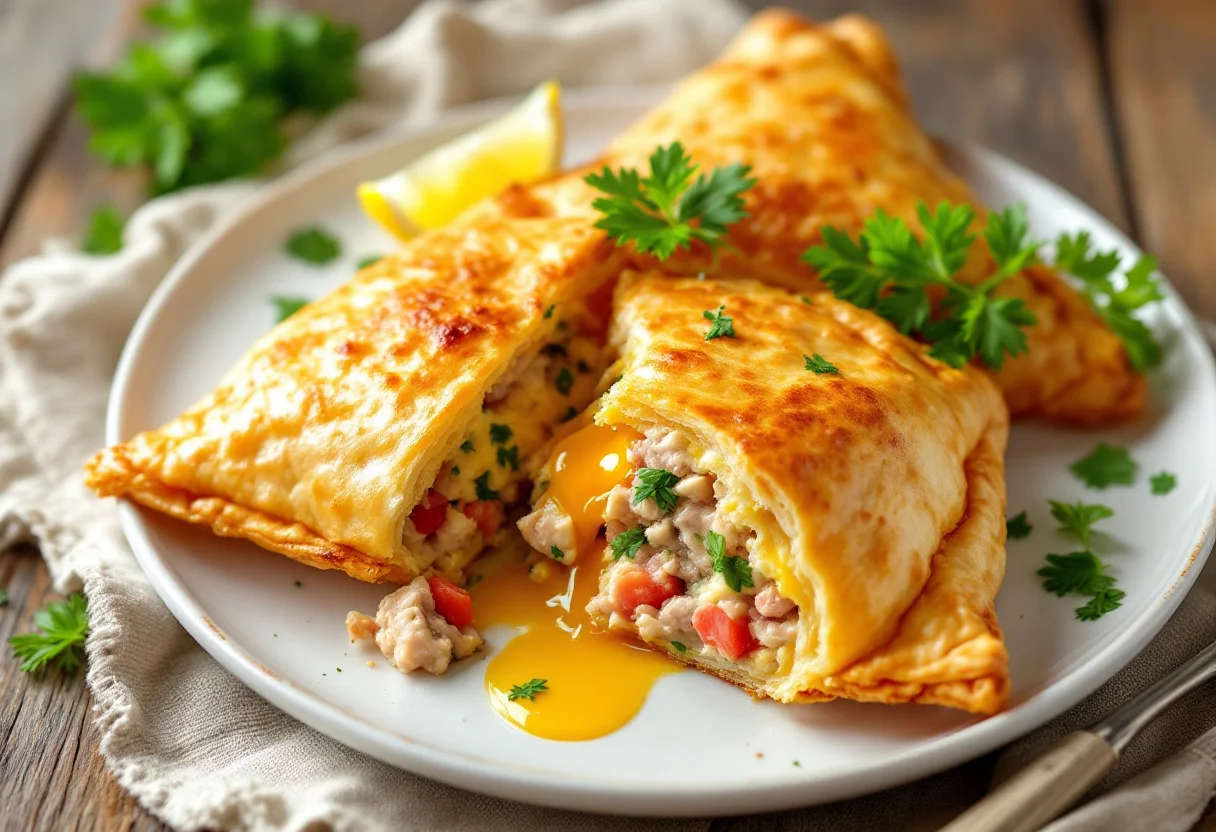
Brik is a Tunisian fried pastry: a sheet of paper-thin malsouka dough wrapped around a filling (classically a whole egg) then folded and fried until shatteringly crisp. The name comes from the Turkish börek, a reminder of the Ottoman cooks who carried thin-pastry techniques across the Mediterranean. The signature version, brik à l’oeuf, traps a raw egg inside so the yolk stays runny after frying. Crisp outside and molten inside, it is a North African favorite. It is street food, holiday food, and weeknight food all at once.
A short history
Brik belongs to a big family of thin-pastry foods that spread with the Ottoman Empire, and most food writers link its name to the Turkish börek. Tunisia made the idea its own, building it around malsouka, a tissue-thin pastry sold fresh in markets. Some cooks tie brik’s rise to the influence of Andalusian and Mediterranean traders who settled along the Tunisian coast, while others credit home kitchens passing the technique down for generations. Like many dishes with long histories, its exact path is a friendly subject of debate. What everyone agrees on is that brik became a fixture of Tunisian tables, especially during Ramadan, when it opens many evening meals after sunset, fried fresh to order.
What’s in it?
The wrapper is malsouka (also spelled malsuka or warqa), a thin wheat pastry that fries up crackly. The classic filling is simple: a raw egg, chopped parsley, and a spoonful of harissa or capers, sometimes with grated cheese. The most famous version adds tuna, a pantry staple along the coast. Other cooks fold in mashed potato, cooked lamb or chicken, or shrimp. A little olive oil and lemon often round things out. Egg white seals the edge so it holds in the oil. Each family has its own balance, but the egg-and-tuna combination is the one most people picture.
How do you eat it?
Brik is finger food, and eating it is half the fun. You pick up the hot triangle, tip your head, and bite into a corner. The trick is to catch the runny yolk before it escapes down your wrist. Squeeze on lemon first if you like. It is served fresh and very hot, straight from the pan, often as a starter or a light meal with a simple salad. During Ramadan it frequently breaks the fast. Eat it right away: the magic is in that contrast between the shattering shell and the soft center, and it fades as it cools.
Could this be tomorrow's mystery dish?
Play today's Dishle and find out.