Dish guide
What Is Hoppers? Sri Lanka's Bowl-Shaped Pancake
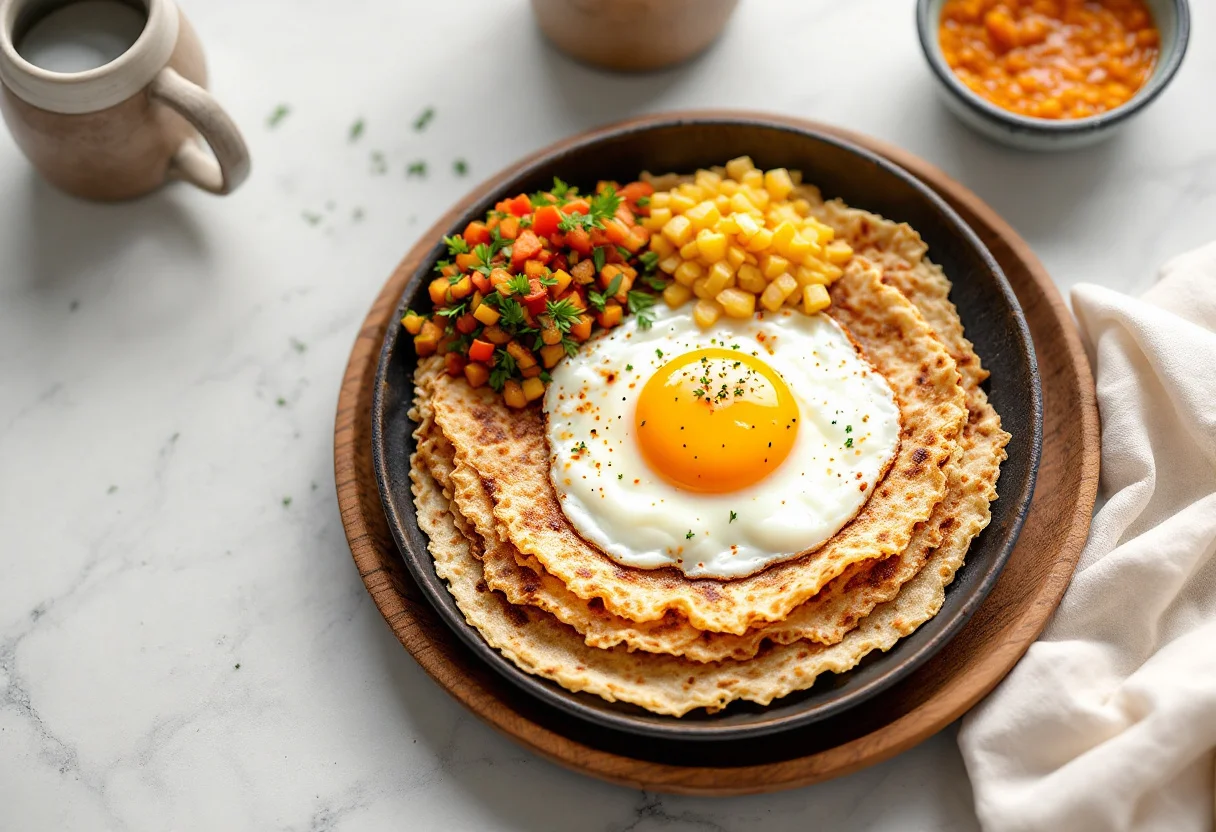
A hopper is a bowl-shaped pancake from Sri Lanka, made by fermenting a batter of ground rice and coconut milk, then cooking it in a small round-bottomed pan until the edges turn lacy and crisp. The English name likely comes from the Tamil and Malayalam word appam, which is also what the dish is called across much of South India, so locals use both names freely. The center stays soft and spongy while the rim shatters like a thin cracker, and the whole thing carries a faint sour note.
A short history
Hoppers belong to a family of fermented rice pancakes eaten across southern India and Sri Lanka for generations. Cooks traditionally leavened the batter with toddy, the naturally fermented sap of palm trees, which gave the pancakes their gentle tang and airy lift. Today many people use a little yeast or baking soda instead and let the batter rest overnight. In Sri Lanka, hoppers grew into an everyday food sold from small shops and street stalls, often cooked fresh to order. The closely related appam remains a staple in Kerala and Tamil Nadu, where similar pans and batters appear. Rather than competing over who made it first, these neighboring cooks share a long, overlapping story shaped by trade.
What’s in it?
The batter starts with raw rice, soaked and ground to a smooth paste, then loosened with coconut milk and a pinch of sugar. A leavening agent (toddy, yeast, or baking soda) sets off a slow fermentation that fills the batter with tiny bubbles. That is all a plain hopper needs. From there the variations multiply: an egg hopper holds a whole egg cracked into the center as it cooks, while milk hoppers get an extra pour of thick coconut milk for a richer, custardy middle. String hoppers are a different cousin, pressed from steamed rice-flour dough into delicate nests.
How do you eat it?
Hoppers are a beloved breakfast and dinner food, almost never eaten alone. The classic partner is lunu miris, a fiery relish of pounded onion, chili, and Maldive fish, scooped up with torn pieces of the crisp rim. Many people also pair them with coconut sambol, a dhal curry, or a soupy chicken or fish curry ladled straight into the bowl-shaped center. You eat with your hands, breaking off the lacy edge first and saving the soft, egg-filled middle for last. Served hot and fresh off the pan, a stack of hoppers at the table tends to disappear fast.
Could this be tomorrow's mystery dish?
Play today's Dishle and find out.