Dish guide
What Is Injera? Ethiopia's Sour Flatbread Plate
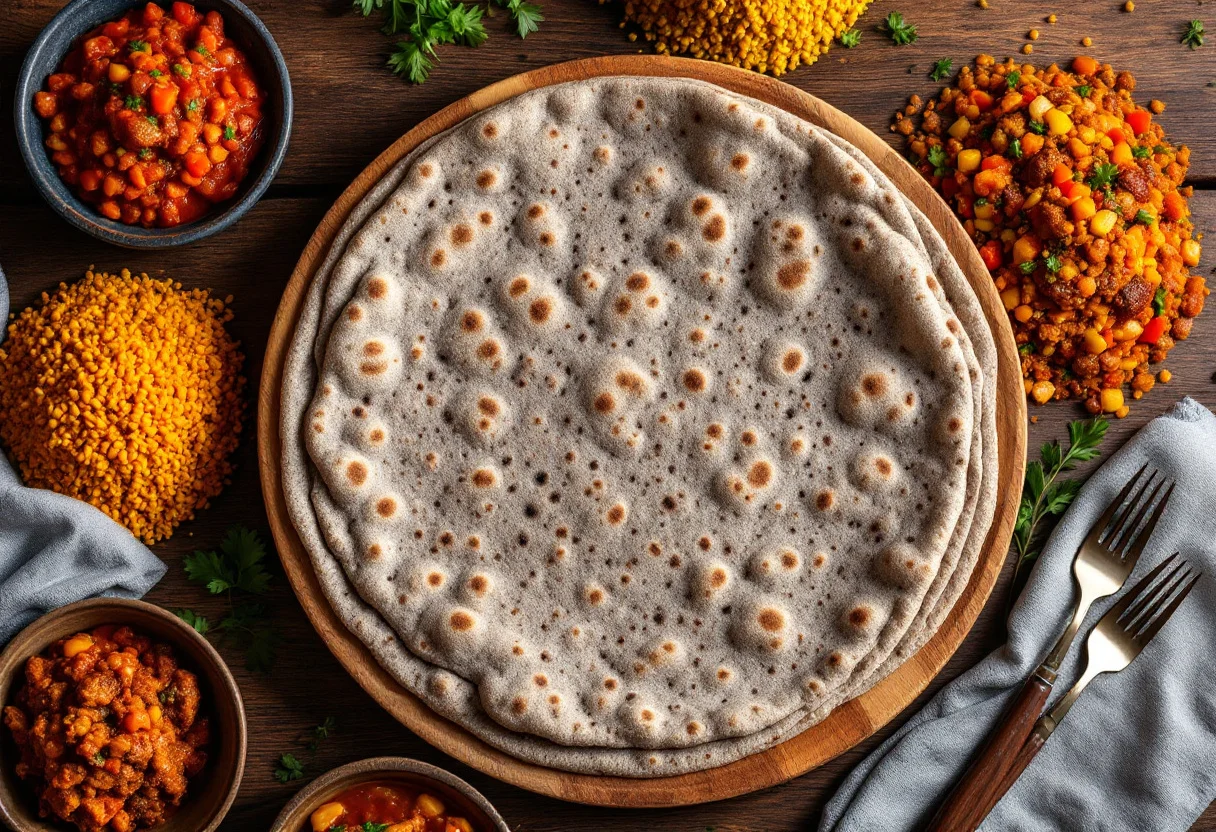
Injera is a large, sour, pancake-like flatbread from Ethiopia and Eritrea, made by fermenting a batter of teff (a grain whose seeds are barely bigger than poppy seeds), then pouring it onto a hot clay griddle until the top sets into a lacy field of tiny holes the local cooks call eyes. The name comes straight from Amharic, and the finished bread quietly does triple duty: it is the plate, the serving cloth, and the only utensil you need at the heart of nearly every shared meal.
A short history
Teff has grown in the Ethiopian highlands for thousands of years, long enough that it’s woven into daily life across the region. Both Ethiopia and Eritrea claim injera as their own, and rather than settle that, most cooks shrug and keep baking; the bread belongs to a shared highland kitchen that crosses the modern border. Fermentation is the clever part: wild yeasts and bacteria sour the batter over a day or three, which both flavors the bread and makes teff’s nutrients easier for the body to use. The griddle, a wide clay disk called a mitad, is often a treasured heirloom.
What’s in it?
Classic injera is just two things: teff flour and water, mixed into a thin batter and left to ferment. The wild starter, called ersho, is the liquid saved from a previous batch, like a sourdough culture passed along. Teff comes in shades from ivory to deep brown, and the darker grains give a nuttier, more rustic bread. Because teff is pricey outside the highlands, cooks abroad often stretch it with wheat, barley, or rice flour, which yields a paler, milder, less tangy result. A pinch of salt is about the only seasoning the batter ever needs.
How do you eat it?
Injera arrives as the foundation of the meal, spread flat across a wide platter with mounds of stews, called wot, and vegetables piled on top. Extra rolled sheets always sit ready on the side. You eat with your right hand, tearing off a piece and using it to pinch up a bite of stew, no fork needed at all, since the bread itself is the fork. As the meal goes on, the base layer soaks up the sauces and becomes the best part. Sharing one platter is the point; it’s food meant for company, ending with gursha, hand-fed bites offered to friends.
Could this be tomorrow's mystery dish?
Play today's Dishle and find out.