Dish guide
What Is Ropa Vieja? Cuba's Shredded Beef in Tomato Sofrito
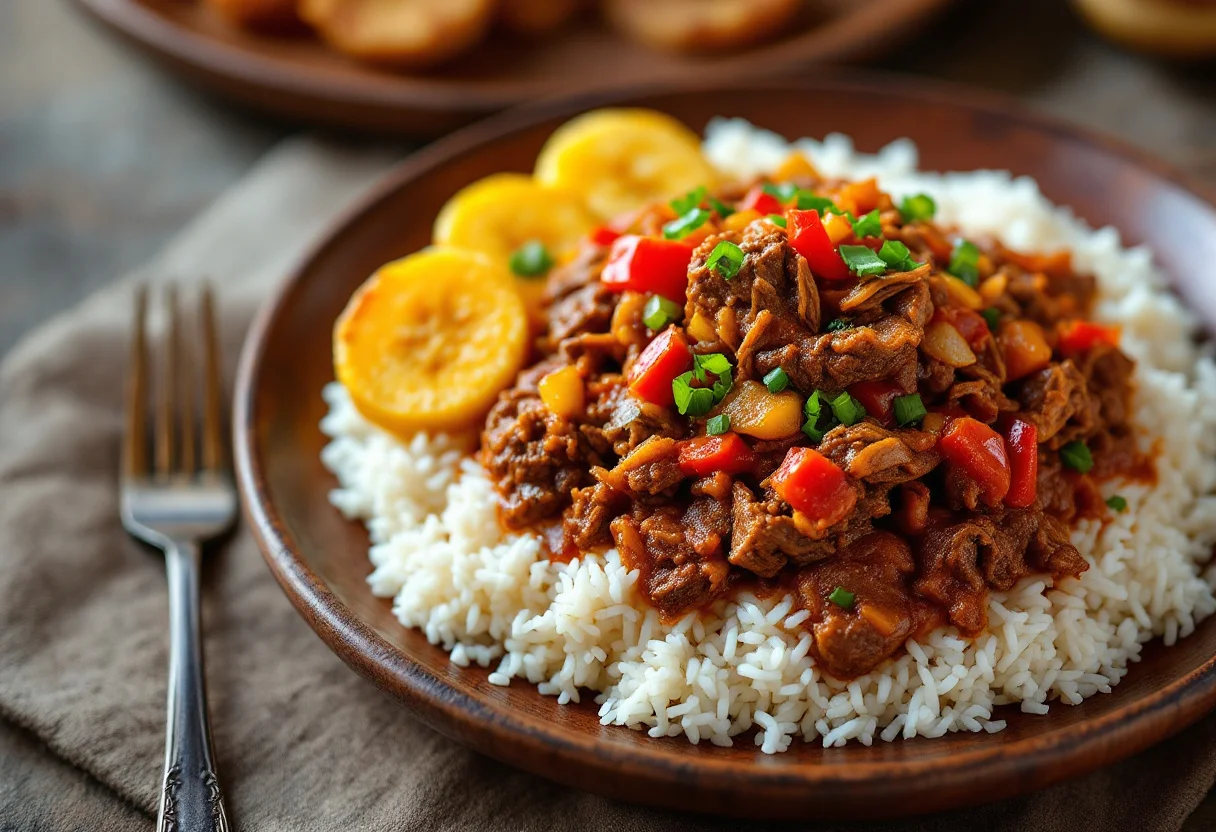
Ropa vieja is a Cuban braised-beef dish in which a tough cut like flank or skirt steak is simmered until it falls apart, then pulled into long, soft shreds and folded back into a tomato-and-pepper sauce. The name means “old clothes” in Spanish, a wink at how the frayed strands of meat look like a heap of tattered rags. Cuba treats it as a national dish, but cooks trace its roots back across the Atlantic, and the friendly argument over where it truly began has never been settled.
A short history
Most food historians point to Spain, and to the Canary Islands in particular, as the dish’s likely starting point. A popular thread also links it to Sephardic Jewish cooking, where a slow-simmered, make-ahead beef stew suited the rhythm of a day of rest: cook it once, shred it, and serve it again without lighting a new fire. Spanish settlers carried these habits to the Caribbean, where Cuba folded the dish into its own pantry and adopted it as a beloved staple. A favorite Cuban legend offers a humbler tale: a penniless man, with no money for a feast, shredded his own worn clothing in the pot, and love turned the rags into meat. Each version has its champions, and the debate stays warm and unsettled.
What’s in it?
The backbone is an inexpensive, well-worked cut of beef (flank, skirt, or brisket) that rewards long, gentle cooking. The flavor base is a sofrito: onions, green bell peppers, and garlic softened in olive oil. Cooks add tomato in some form, plus cumin, dried oregano, and bay leaves, and often a splash of dry white wine. Briny extras like green olives, capers, or strips of roasted pimiento turn up in many kitchens. The meat is first simmered in seasoned water until tender, then shredded by hand or fork and returned to the sauce to soak up everything around it.
How do you eat it?
Ropa vieja is hot, homey, sit-down food, almost always served over a mound of fluffy white rice that catches the sauce. Black beans round out the plate, and sweet fried plantains (maduros) add a soft, caramelized contrast to the savory beef. Many cooks add tostones, the twice-fried green plantain rounds, or a piece of crusty Cuban bread for mopping. It is eaten with a fork, often as the centerpiece of a family lunch or weekend meal where the pot has been quietly bubbling for hours. Leftovers, fittingly, taste even better the next day.
Could this be tomorrow's mystery dish?
Play today's Dishle and find out.